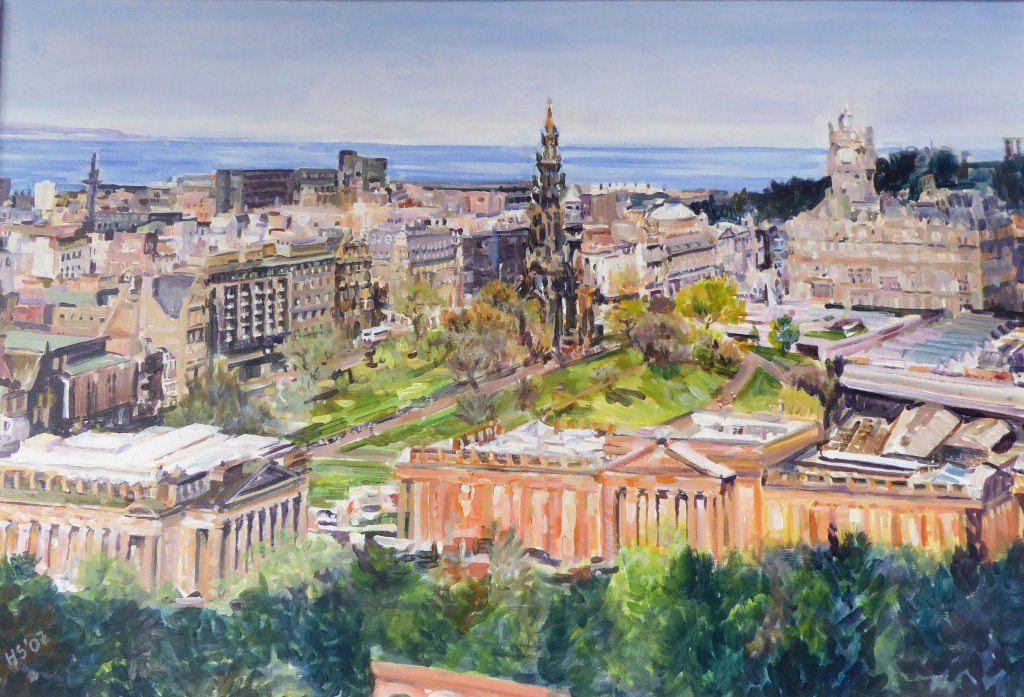
Over the years I have produced a number of paintings of Edinburgh. This selection includes my interpretation of some of the better known landmarks in the city and maybe a couple that are less well known to visitors. All of these images are available to purchase as cards or limited edition Giclee prints.
This view will be familiar to anyone who has visited Edinburgh Castle and features a number of city landmarks. Painted in acrylic on canvas, it portrays Princes Street Gardens with the National Gallery of Scotland in the foreground and in the middle distance the Scott Monument: among the largest monuments to any writer anywhere in the world. Calton Hill and the Firth of Forth can be seen in the distance with the Kingdom of Fife just visible on the horizon.
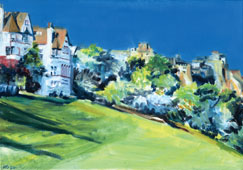
Here is the view from the other direction, Edinburgh Castle seen from the Mound. Another acrylic on canvas which also features Ramsay Gardens on the left. Designed and constructed by architect Stewart Henbest Capper, for Patrick Geddes as part of an urban renewal project of Edinburgh’s old town in the 1890s, the aim was to improve the living conditions of the working classes and attract wealthier residents to the area. Ramsay Gardens is now considered to be a rather desirable address, if somewhat noisy particularly during the Edinburgh Festival.
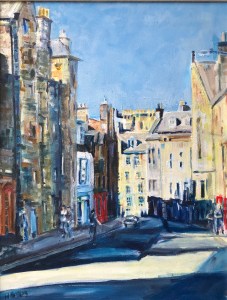
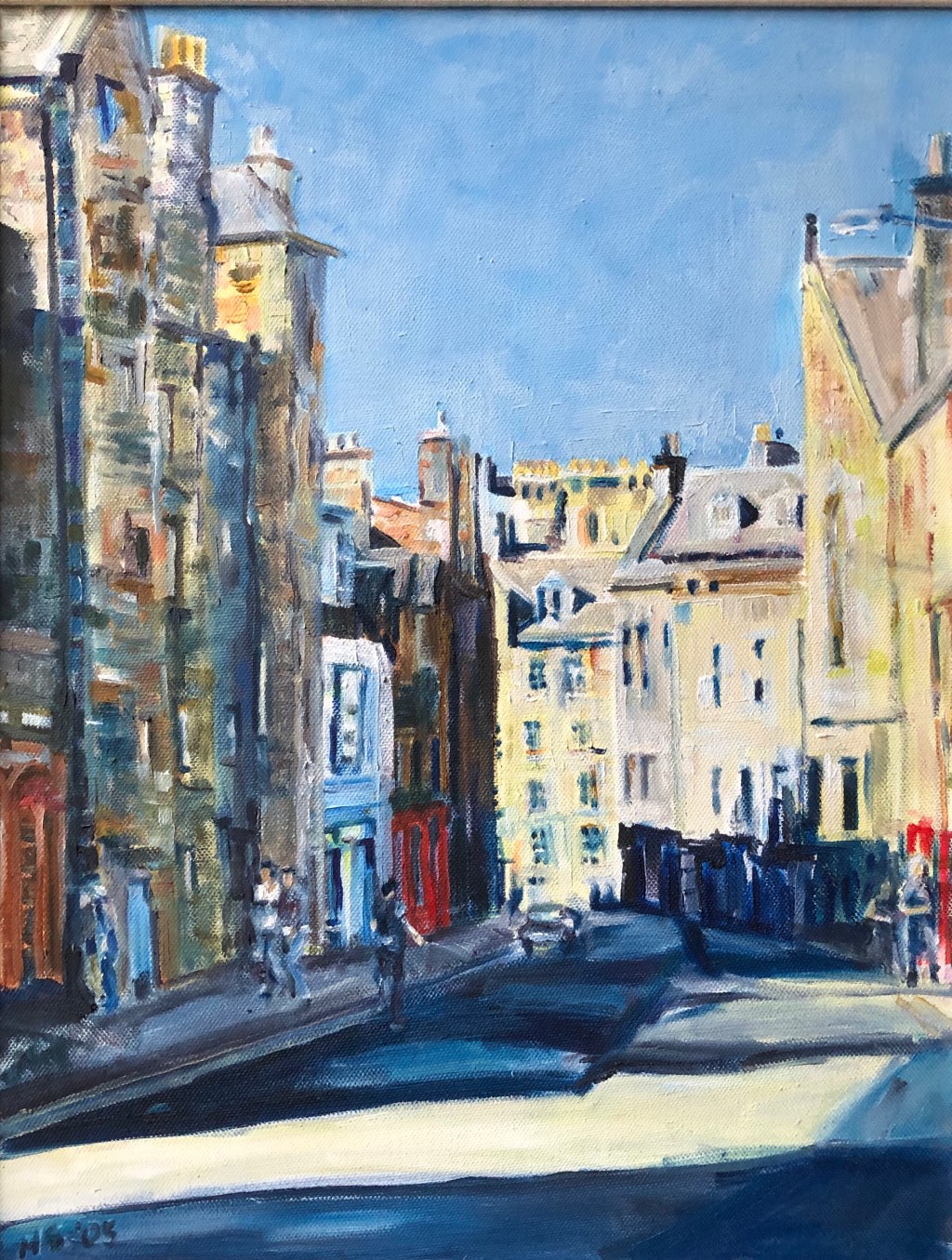
Candlemaker Row is part of medieval Edinburgh and a popular thoroughfare for visitors heading into the Grassmarket after photographing the statue of Greyfriars Bobby, which is situated nearby. This acrylic on canvas painting shows the view from George IV Bridge looking toward the Grassmarket. The sunlight casts long shadows over the quiet road which is something of a rare occurence. In recent years, the city has experienced large influxes of visitors all the year round, a development that has proved controversial with some of the citizens of Edinburgh.

Arthur’s Seat, an acrylic on canvas, seen here in the distance beyond the back gardens of the Grange area of Edinburgh. This ancient volcano, is the site of one of four hill forts dating from around 2000 years ago. It is the highest point in Holyrood Park and offers views of the Scottish Parliament, Holyrood Palace, the Royal Mile and the city beyond. It has become a ‘must do’ on the tourist circuit as well as being a great vantage point to watch the Festival and New Year firework displays.
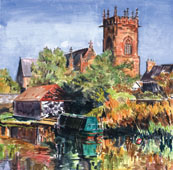
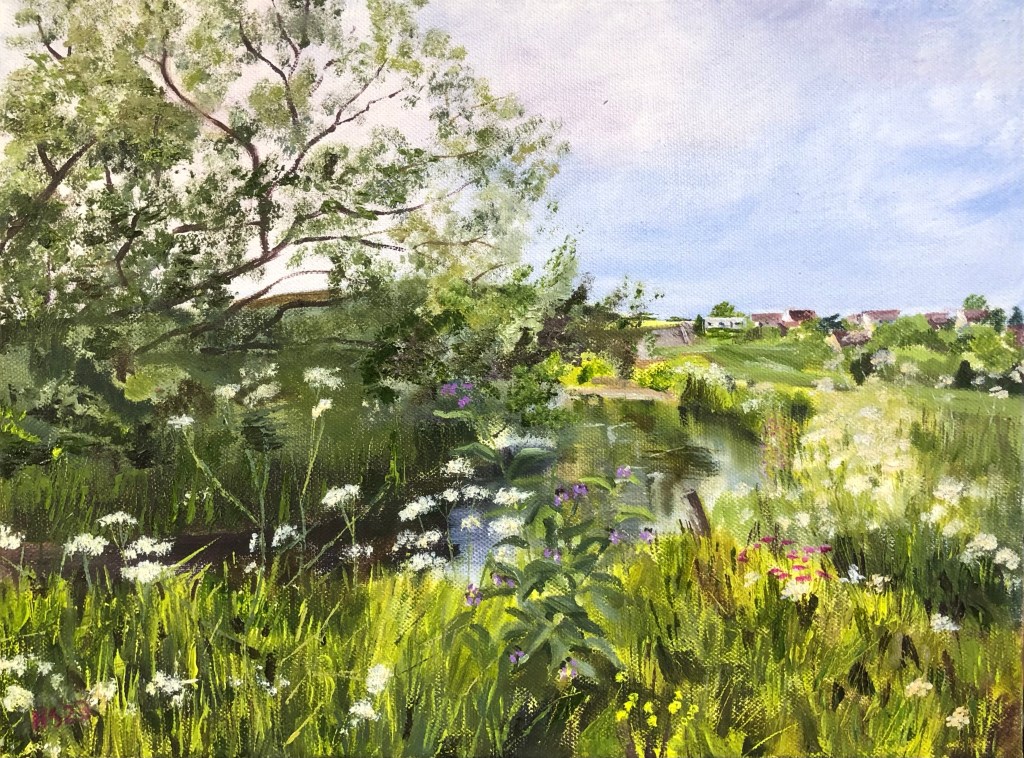
A less well known Edinburgh landmark as far as visitors to the city are concerned, but a favourite spot for locals. The Union Canal runs from Edinburgh to Falkirk, where it joins the Forth and Clyde Canal providing the option of an onward journey to Glasgow. Popular with walkers, cyclists, and those who enjoy canoeing and travelling by barge, it has enjoyed a revival since the turn of the century when it was reopened after decades of decline. Seen here from opposite Polwarth Parish Church this acrylic on canvas, is vibrant with colour, capturing the reflection of the vegetation, the barge and the Forth Canoe, clubhouse in the water.
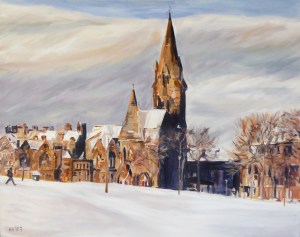
A building well known to the residents of Edinburgh, Barclay Viewforth Church was completed in 1864 to a design by Frederick Pilkington. It dominates the skyline to the north of Bruntsfield Links, which hosts Edinburgh’s fourth oldest golf club. The church is seen here on a cold winter’s day: the sky behind promises yet more snow and a lone figure is seen on the left, perhaps hurrying home to get out of the cold. The original work was execute in acrylics on canvas.
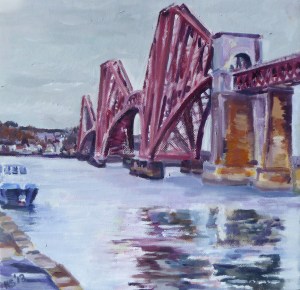
OK so this isn’t, strictly speaking, an image of Edinburgh and my apologies to residents of the two Queensferries, but I’ve included it here because I like it, and because visitors to the city might well take a trip to South Queensferry where they will see this magnificent feat of engineering striding majestically across the forth. Executed in oils on canvas the image conveys the strength of the structure which has provided the rail link between the Lothians and the Kingdom of Fife since 1889.







 Art by Smart
Leave a comment